Sporting Clays in South Dakota: A Field Guide
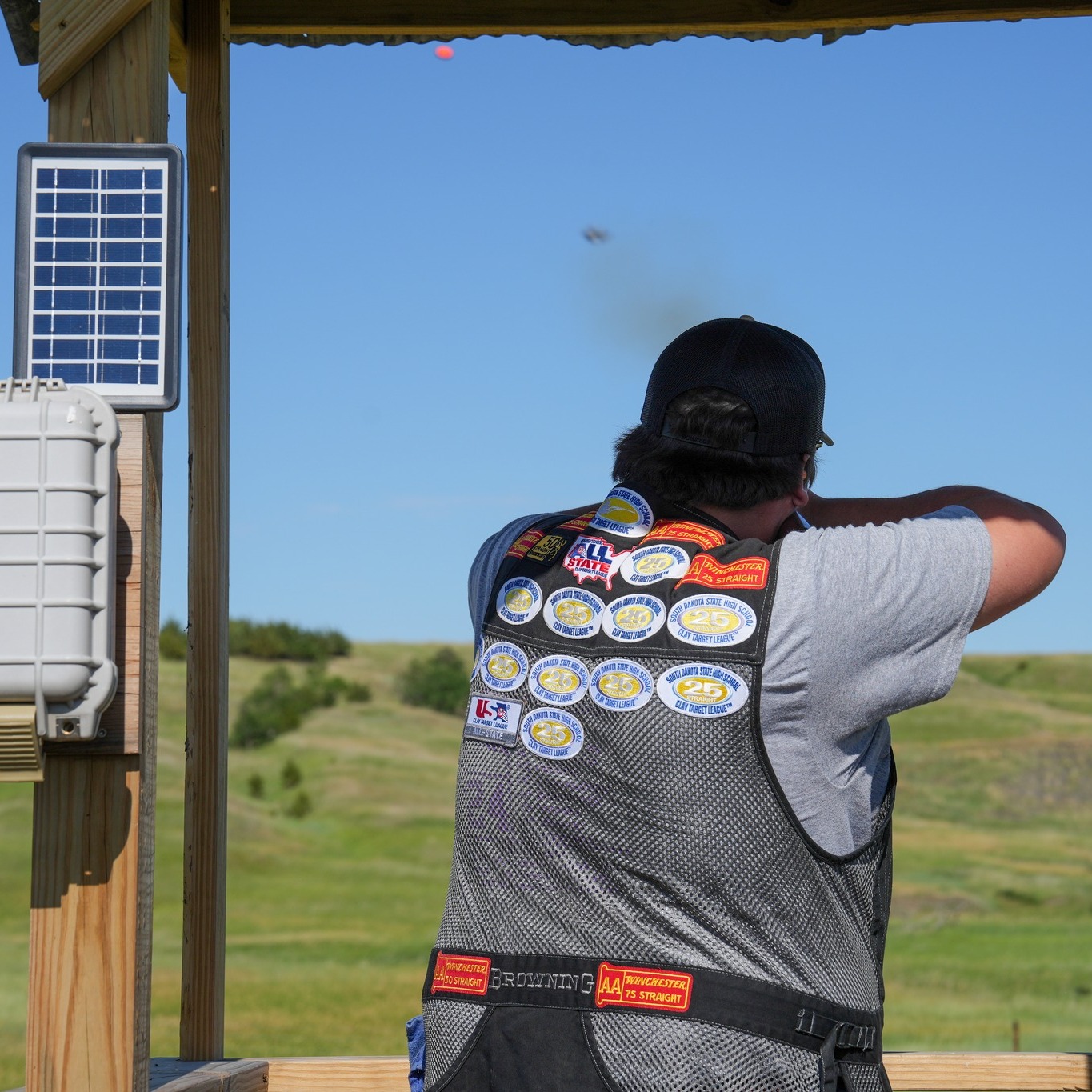
Sporting clays is the shotgun game that looks least like a shooting range and most like a walk.
You move between stations set out across real terrain. At each one, targets come at you from somewhere different: high and behind, low and skittering across the ground, crossing hard, dropping out of trees. The idea is to imitate live birds, which is why it's sometimes called golf with a shotgun, and why hunters use it to stay sharp between seasons.
It's also, for a lot of people, the easiest way into shooting sports. No license, no season, no dog, no dawn. Just a few hours.
Here's how it works and what to expect.
Sporting Clays vs Trap vs Skeet
People use these interchangeably and they're three different games.
Trap — targets launch away from you from a single house, roughly the same line every time. Predictable, good for fundamentals.
Skeet — targets cross in front of you from two fixed houses at set angles. More variety, still highly repeatable.
Sporting clays — no two stations alike, no two courses alike, and the presentations are built to mimic actual quarry. Harder, more interesting, and far more like hunting.
If you've shot trap at a club and found it repetitive, sporting clays is the answer to that.
How a Round Works
You'll walk a course of stations. Ours has ten.
At each station a pair of targets is thrown in a set sequence, you shoot, and the group moves on. A round takes a couple of hours depending on group size and how much arguing happens between stations, which, in our experience, is most of the entertainment.
Scores are kept if you want them kept. Nothing like a little friendly competition.
What You Need
Less than people assume.
A shotgun. 12 or 20 gauge both work well. A 20 is lighter to carry around a course and kinder on the shoulder over a long morning, which matters more than people expect on station eight.
Shells. Target loads, typically 7½ or 8 shot. Bring more than you think...a round goes through more than a hunt does.
Eye and ear protection. Non-negotiable, and usually available on site.
Nothing else. No license. No season. No dog.
If you're arriving with none of the above, ask before you come. We can sort out a gun and shells.
If You've Never Shot Before
This is the best entry point in shooting sports, and it isn't close.
Hunting asks you to learn a lot at once (safety, dogs, terrain, birds, weather, other people) and do it with adrenaline running. A clays course removes all of that. One target at a time, a known sequence, someone standing beside you explaining what the target is about to do.
Most first-timers hit something in the first ten minutes. That's the point.
Bring a young shooter here before you bring them to a field. An hour on clays does more for confidence than a whole morning of walking.
Group & Corporate Shoots
Clays are unusually good for groups, for a reason that has nothing to do with shooting.
The format keeps everyone together. You walk between stations as a group, everybody watches everybody, and the skill gap doesn't split people up the way it does in a field. A complete beginner and a lifelong shooter have a genuinely good time at the same station, which is not true of most activities you can organize for a mixed group of colleagues.
It's also short. A round fits in a morning, which means it slots into a larger day: shoot in the morning, lunch at the lodge, a hunt, meetings, or a ranch tour in the afternoon.
For companies building a day or two out here, see weddings and events.
Year-Round, Which Hunting Isn't
Pheasant season has dates. Clays don't.
That's the practical argument for a clays outing: you can do it in February, in July, on a Tuesday. It's the reason a lot of our guests shoot clays when they can't get a hunt on the calendar, and the reason it works as a standalone day rather than only as an add-on.
Combining Clays + A Hunt
Plenty of groups do both in the same trip, and the order matters.
Clays first. An hour on the course before the first hunt sorts out everyone's eye, settles nerves, and reveals who needs a word about safety before there are dogs and live birds involved. Guides quietly appreciate this.
Clays between hunts. Half-day hunt in the morning, clays in the afternoon, for groups who want more shooting than the bag limit allows.
Clays for the non-hunters. Not everyone in a group wants to walk four miles through cover. The course means they're not sitting in the lodge all day.
See pheasant hunting for how the hunting side works.
The Lazy J Course
Ten stations set across the same prairie ground we hunt, ravines, shelterbelts, and open sky, rather than a flat field with a couple of traps on it. Terrain is most of what makes a course interesting, and we have a lot of it.
We're in Ideal, in Tripp County, SD. Our travel and area guide has directions and drive times from the regional airports and towns.
To book a round, a group shoot, or a corporate day, call 605.840.2189 or see the course.
