First Time on a Guided Pheasant Hunt: What to Expect
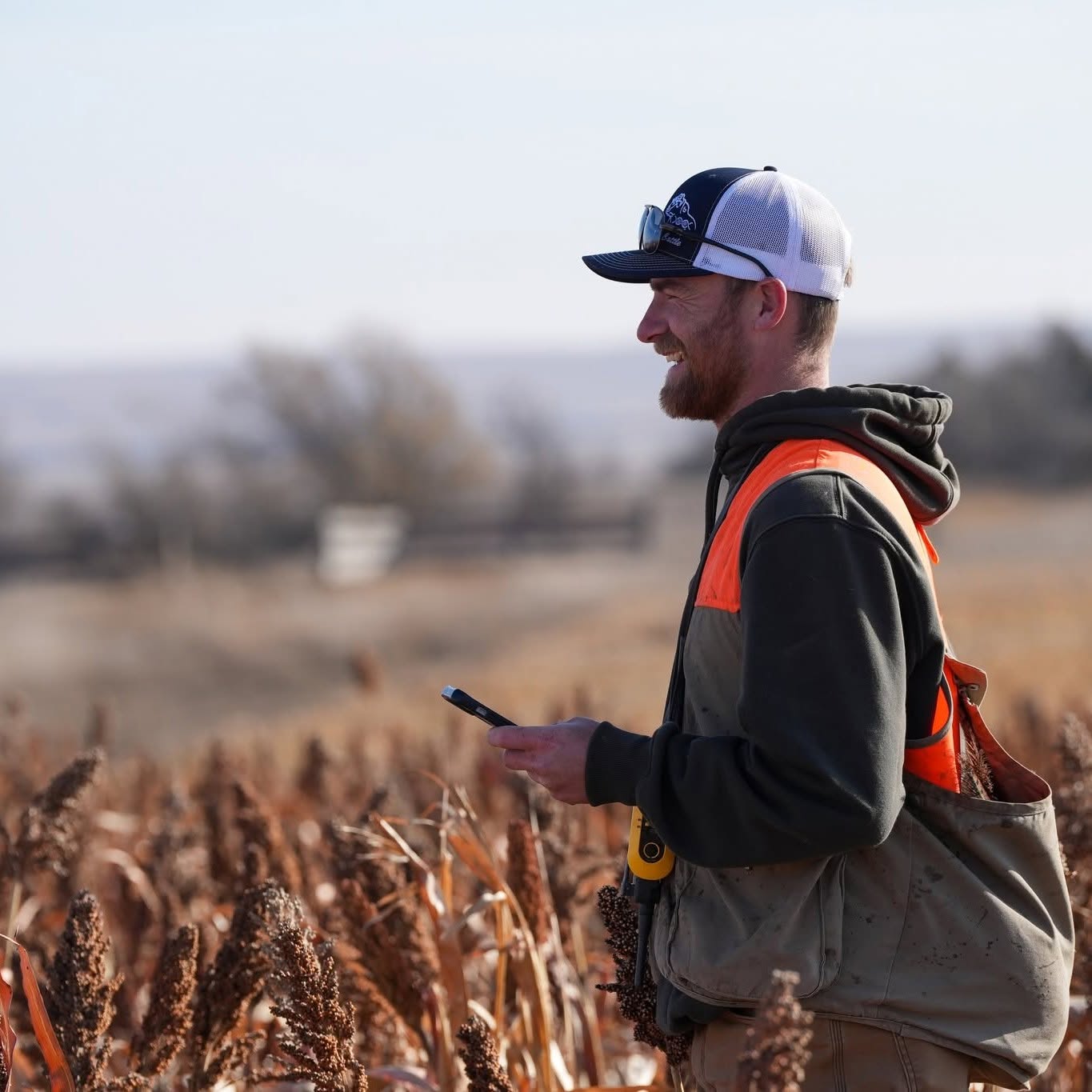
Most first-timers show up a little nervous. Not about the shooting...about not knowing how the day works, and not wanting to be the one who doesn't know.
Nobody here cares how many birds you hit. Here's exactly what the day looks like, so you can stop wondering.
The Morning Is Slower Than You Think
South Dakota shooting hours don't start until 10 AM Central. That's a gift.
You'll eat a real breakfast, meet your guide and his dogs, and sit through a safety talk — muzzle discipline, where the line is, what to do when a bird gets up behind you. It takes fifteen minutes and it's the reason nothing goes wrong.
Then you load into the truck and drive to the first field.
Walkers and Blockers
A pheasant field is hunted like a slow net closing.
Most of the group spreads out in a line and walks the cover — that's the walkers. A few others post at the far end and stand still — the blockers. Roosters run ahead of the walkers, hit the end of the field, and flush between the two groups.
Your guide will tell you which you are and where to stand. Both jobs matter. Blocking looks like standing around until forty birds come out of the grass at once.
Keep the line straight. That's the one rule that carries the whole day: don't drift ahead, don't fall behind. If you have to stop to untangle from a fence, holler so the line stops with you.
Rooster or Hen?
Only roosters are legal. The good news is they make it obvious.
A rooster is long-tailed and loud — he cackles going up, and in October light he's unmistakable. Hens are brown, short-tailed, and silent. When in doubt, don't shoot. Every guide in South Dakota would rather watch a bird fly off than sort out a mistake.
Your guide will call "rooster!" more often than not. Listen for it.
The Dogs Are Working
Let them. Don't call them, don't try to steer them, and don't get frustrated when one busts a bird out of range — that rooster was leaving anyway.
If you knock a bird down, mark where it fell, stand still, and tell your guide. The dog will find it. Watching a good dog trail a running cripple through heavy cover is the part most guests remember longest.
You Will Miss
Everybody does. Pheasants flush loud and close, usually when you're mid-step and off balance, and the first three or four will go untouched while your heart rate comes back down.
Nobody is counting. The guy who tells you he doesn't miss is lying.
After the Last Field
Birds get cleaned, packaged, and frozen for you. There's usually a round of clays, a drink by the fire, and a dinner that ruins you for regular food. Tipping your guide is customary — ask us what's typical and we'll tell you straight.
Come hunt with us at lazyjclub.com. You'll fit in by lunch.
